UK design registration protection. National or Hague – a practical investigation
William Burrell



Matilda Joslyn (later Matilda Gage) is one of those thousands of hugely influential women through time which popular history conspired to forget. Born in Cicero, New York State in 1826,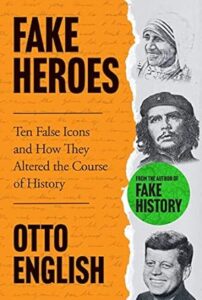 she grew up being tutored by her father and eventually went on to complete her education at the Clinton Liberal Institute in New York. Aged 19, she got married and shortly after that, she gave her first public speech at a convention on women’s rights and suffrage. In the years that followed she raised a family but became a prolific writer of letters to newspapers and campaigned for the interests of freed slaves, indigenous native Americans, and women’s rights before herself turning to journalism in her forties. In 1869, she co-founded the National Woman Suffrage Association and became a regular contributor to its newspaper, The Revolution.
Gage bristled at the injustice of all types of discrimination but became particularly active in the cause for women’s rights and was a pioneering feminist who was not afraid to forcefully speak her mind. She was to fight the campaign right to her end and beyond, as she wrote her own epitaph, emblazoned on her gravestone which reads: ‘There is a word sweeter than mother, home or heaven. That word is liberty.’ In 1870 Gage published a short book called Woman as Inventor, attacking the patriarchal narrative of history that had men inventing everything while women sat about raising babies. Gage’s case was essentially that women had not simply been ‘present’ throughout history but active participants in it.
The book begins with the story of Catharine Littlefield Greene who had the idea for a cotton gin [engine], writing: ‘Although the work on the model was done by the hands of Eli Whitney, yet Mrs Greene originated the idea.’ Gage then goes backwards through time, arguing that social pressure had pushed the contribution of countless women into anonymity. In a later short publication called ‘All the Rights I Want’, she wrote: ‘It is sometimes better to be a dead man, than a live woman’ and in the case of women scientists, well, never a truer word was written, as we shall see.
In 1893, Gage published another influential treatise, titled Woman, Church and State, which argued that throughout recent history, the church had branded ‘wise, or learned woman’, as ‘witches’ to marganalise, persecute or kill them. ‘What was termed magic, among men was called witchcraft in women. The one was rarely, the other invariably, punished,’ she wrote.
It was a compelling argument and one which resonated with her son-in-law, Frank Baum – a male ally of early American feminists, who used his mother-in-law as the basis of the character Glinda in his book The Wonderful Wizard of Oz. For that much-loved book (and 1939 film version The Wizard of Oz) is in fact a none too subtle feminist parable. All the fairly dim-witted men in the story, after all, whether they be lions, scarecrows, tin or wizards, are led by Dorothy and wise ‘witch’ Glinda, and it is the women who outwit and defeat evil in the godless kingdom.
Gage’s legacy stretches well beyond her life and fiction. The Matilda Effect is a term coined in her honour by US science historian Margaret Rossiter, which describes the bias wherein women in science are routinely written out of the story of their own achievements. Rossiter was one of the few women enrolled on a science degree at Yale in 1969 and struggled to get taken seriously. That and her interest in the role of women in science history inspired her book Women Scientists in America, published in 1981. The book sought to highlight the contribution of women throughout time and went right back to the contributions of the twelfth-century physician, Trota of Salerno.
For centuries Trota’s name was entangled with that of ‘Trotula’, to whom twelfth-century medical journals including De curis mulierum (On Treatments for Women) were attributed. It is likely that Trota’s own work was contained within it·but ‘Trotula’ was long assumed to be a fictional person until Trota’s actual work was rediscovered in the twentieth century, proving that she made valuable early contributions to the cause of women’s health.
Through the centuries that followed, women faced almost insurmountable odds if they wanted to work in science·or medicine – not least because they were barred from studying it.
In 1794, during the French Revolution, an 18-year-old woman called Sophie Germain tried to enroll at the newly opened engineering academy École polytechnique, but this was a revolution too far even for contemporary Paris and she was rejected by the university. Undeterred, she took on the identity of a male student, and calling herself ‘Monsieur LeBlanc’, she reapplied, only to gain entry. She quickly attracted attention from the professors and eventually, the Italian-born mathematician Joseph-Louis Lagrange, requested a meeting. ‘LeBlanc’ was obliged to reveal her identity, but Lagrange was so impressed by her knowledge and enthusiasm that he became her mentor and she continued to study, albeit outside of the institution, under his guidance.
Germain’s principal area of research was number theory, the study of the set of whole numbers, but from 1808 her focus shifted in another direction, and she began studying the mathematics of elasticity. Despite Lagrange’s guidance, she was largely self-taught and as such there were gaps in her knowledge that allowed fellow, male, contemporaries to dismiss her and parts of her work, but in 1816 she defied them all and won the French Academy of Sciences prize by producing a mathematical explanation for elasticity. To win it she had been obliged to enter anonymously, meaning that her work was open to plagiarism. So, when the far more famous French mathematician Simeon-Denis Poisson published his work on elasticity, he neglected to acknowledge that Germain’s thesis had formed the catalyst for his ideas.
Sophie Germain was just one of thousands of women in history who suffered the Matilda Effect – and most of their names will probably remain forever lost in obscurity. But not all. Take the story of the American chemist, Alice Ball, who was the first woman and first African American, to receive a master’s degree from the University of Hawaii in 1915, when she was just 23.
Ball’s great achievement was to develop the first effective injectable treatment for leprosy. It had long been established that chaulmoogra oil, which had been used in traditional tribal medicine for thousands of years, had properties which could be used to treat the infection, albeit with mixed results. The problem was that when ingested it was largely ineffective and when injected it caused lesions under the skin. Ball was one of several scientists working on a solution, but it was she who managed to isolate the beneficial ethyl ester compounds in the oil and modified them to form a soluble extract that could be injected and easily absorbed into the bloodstream.
Clinical trials began two years later, and her discovery would go on to cure thousands of people and reduce the symptoms in many thousands of others. Indeed, Ball’s method remained the only proven treatment for the disease until well into the 1940s but, unfortunately, she did not live to bear witness to any of it.
Having made the breakthrough, Ball died, in 1916 aged just 24. The cause of death remains a mystery. It may have been tuberculosis, but others have suggested she was poisoned by her lab, perhaps as a result of chlorine, while teaching a class. Either way, she was unable to publish her findings. Instead, they were ‘completed’ by her mentor Arthur L. Dean who took full advantage of the circumstances and passed her work off as his own. The use of isolated ethyl ester even, briefly, became known as ‘the Dean Method’ until Ball’s supervisor, Dr Harry Hollman, outraged by the brazen appropriation of his deceased student’s work, complained loudly about it and in 1922 tried to get her the proper credit she deserved.
Hardly anything is known about Ball. Unlike celebrated male scientists of the era, including Thomas Midgley, no mentions were made of her and there were no entries about her in school textbooks. She left no diaries or personal papers, so there is but a faint trace of who she was and what she was like. Despite Hollman’s best efforts, Ball did not so much fade from collective memory, she was never there in the first place – and it is only in recent years that her achievements have started to be brought to attention.
Much more is known of the life of Austrian-born Jewish scientist Lise Meitner, the first woman to become a full professor of physics in Germany, who worked alongside the famous scientist Otto Hahn for 30 years studying beta decay and, nuclear isomerism, and discovering the element protactinium.
Hahn and Strassmann spent years bombarding uranium with neutrons, which, in the process produced an unexpected effect. For as they did so, the uranium nuclei seemed to break apart and turned into radioactive barium isotopes. Neither could fathom why that was until Meitner and her nephew, Otto Frisch, stepped in and theorised and then demonstrated that a previously unknown process was at work: the uranium nucleus had in fact split in two due to a process Frisch dubbed ‘fission’. Their findings were published in December 1938, but by then, Meitner had already been forced to leave Germany following the introduction of the Nuremberg Laws and was thus a stateless refugee. Moving to Sweden, she continued her worked with Frisch but her name was to lapse into obscurity.
Meitner’s work had been critical to the discovery of fission, but when the 1944 Nobel Prize for Chemistry was awarded to Hahn in 1946, he was the sole recipient. The Nobel Committee did cite his collaboration with Meitner and noted: ‘The important theoretical investigations by Lise Meitner and Frisch, who based their study on the theory of the structure of atomic nuclei developed by Bohr.’
But it was Hahn who got the Nobel Prize and Meitner’s contribution became little more than a footnote to the event. Meitner’s work was recognised by her contemporaries, including Albert Einstein, but was not – and is not – nearly as well known, still, some 55 years after her death.
The list of other women scientists who have been overlooked, edited out or erased makes a very long and very depressing read. It includes Rosalind Franklin, whose work at King’s College, London, in the 1950s on the density and spiral formation of DNA molecules, led scientists James Watson and Francis Crick in 1953 to discover that the structure of DNA was a double helix (a twisted-ladder-like spiral of two interwoven strands). Franklin’s critical contribution to their discovery, which later won Crick and Watson the Nobel Prize in Physiology or Medicine in 1962 (along with Maurice Wilkins), was only acknowledged (by Crick) after her death.
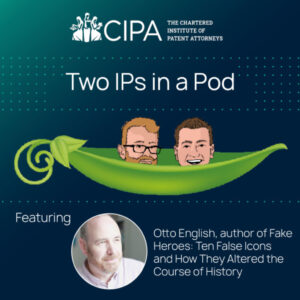
In a November episode of Two IP’s in a Pod, Lee Davies and Gwilym Roberts welcomed Otto English, the pseudonymous persona of the writer and journalist Andrew Scott. Listen at www.cipa.org.uk/podcasts.
Then there’s biochemist Marie Maynard Daly – the first African American woman to receive a PhD, completing her thesis at Columbia University in 1947. She received a grant from the American Cancer Society in 1948, and working in collaboration with her colleague, Dr Quentin B. Deming, broke new ground by establishing the link between cholesterol, clogged arteries and heart attacks. Her pioneering investigations of why heart attacks happen and went on to save millions of lives through both prevention and treatment.
Important work. But had you ever heard of Marie Maynard Daly until roughly 15 seconds ago?
On and on and on it goes: Klara Dan von Neumann, pioneer of computer coding on the ENIAC, the world’s first programmable computer in 1945, whose name, guess what, was omitted from the paper announcing the breakthrough in 1947. Or Frances Oldham Kelsey who, in her role at the US Food and Drug Administration, in 1960 refused to authorise the use of the morning sickness tranquiliser thalidomide because she had fears over its safety and was not convinced that it had undergone rigorous enough clinical trials. The drug was in wide use across the rest of the world already, and in countries including the UK, Spain and Australia, it was later discovered to have led to thousands of babies being born with birth defects. An estimated 10,000 women were affected by the drug and some 40% of babies born to them died as a result. But this tragedy did not unfold in the USA thanks to one person – Frances Oldham Kelsey.
Another scientist, Alice Hamilton, the toxicology expert who tried and failed to warn the world of the potential hazards of leaded petrol, was blocked in her efforts by big oil and vested interests. She died of a stroke aged 101 in September 1970 and, while in the years since, she has been honoured with a statue, a 55 cent stamp (in 1995) and a place in the National Women’s Hall of Fame in Seneca Falls, New York, her real legacy is the lasting impact of her work. Three months after her death, Congress passed the landmark Occupational Safety and Health Act, which revolutionised conditions for working men and women in the USA. Millions of people owe better, safer or longer lives lived – to Alice Hamilton. The legislation dramatically reduced debilitating accidents or deaths in the workplace. It also, inevitably, provided ammunition for moronic right-wing radio presenters and populist politicians down the ages, who have never been near a factory or building site, and allowed them to bang on about ‘health and safety gone mad’ as they sought to roll it all back again.
But you know when you look at the history of CFCs and leaded petrol, the denial of science and the denial of women’s place in it, you really do find yourself asking who the really mad people are in all of this. And more importantly why we continue to listen to people who are so patently and dangerously wrong.
Fake Heroes can be bought in book shops or purchased online via https://linktr.ee/OttoEnglish or at Amazon
William Burrell
Helen Smith
Otto English
Denise Mirandah & Jin Wen Rui
Lee Davies
Bobby Mukherjee
Ria Lloyd
Neil Lampert
Neil Lampert
Denise Mirandah & Jin Wen Rui
William Burrell
Helen Smith
Otto English
Beck Greener LLP
David Pearce
Bristows
EIP
Lucie Jones, Ruth Collins
Rebecca Caulton
Cherrelle Blake-Wilson
Chris Mercer
Epseeta Chowdhury
Ashley Tambe
Abas Roble
Abas Roble
Kathryn Taylor