Committee Updates – July 2026
Committee Updates, Member News
28 July 2026


Opinions
30 September 2025
We have been here before. Ten years ago, to be exact.
In 2015, I stood before CIPA Congress, with all of three years’ experience under my belt, and asked our members to consider a legal services world where transactions took place without human intervention. At the time, many saw artificial intelligence and other emerging technologies as support tools, not human replacements. But I wanted to provoke a conversation.
Shortly after, CIPA hosted a public debate, asking if a world would ever exist in which a patent could be filed, examined, and granted without any human intervention. I will not revisit that debate here. We ground to a final conclusion along the lines of ‘probably, but not a very good one’.
That’s my last reference to patents. This article is a reflection on how my thinking has evolved over the last decade through the lenses of membership associations, professional bodies (such as those in the Memcom community) and professional identity. I hope it resonates with my association leadership peers.
My first thought: the future we were talking about in 2015 is here, or hereabouts. In 2025, that once-theoretical world is rapidly becoming our reality. Not just in intellectual property. Not just in the legal professions. In all professions. AI is drafting and reviewing contracts, crafting arguments, assisting with discovery and advising on strategy. Technology platforms never sleep. They are multilingual. They are becoming faster and better with every interaction. Reading the headlines, this is surely the end of the professional. Isn’t it?
No.
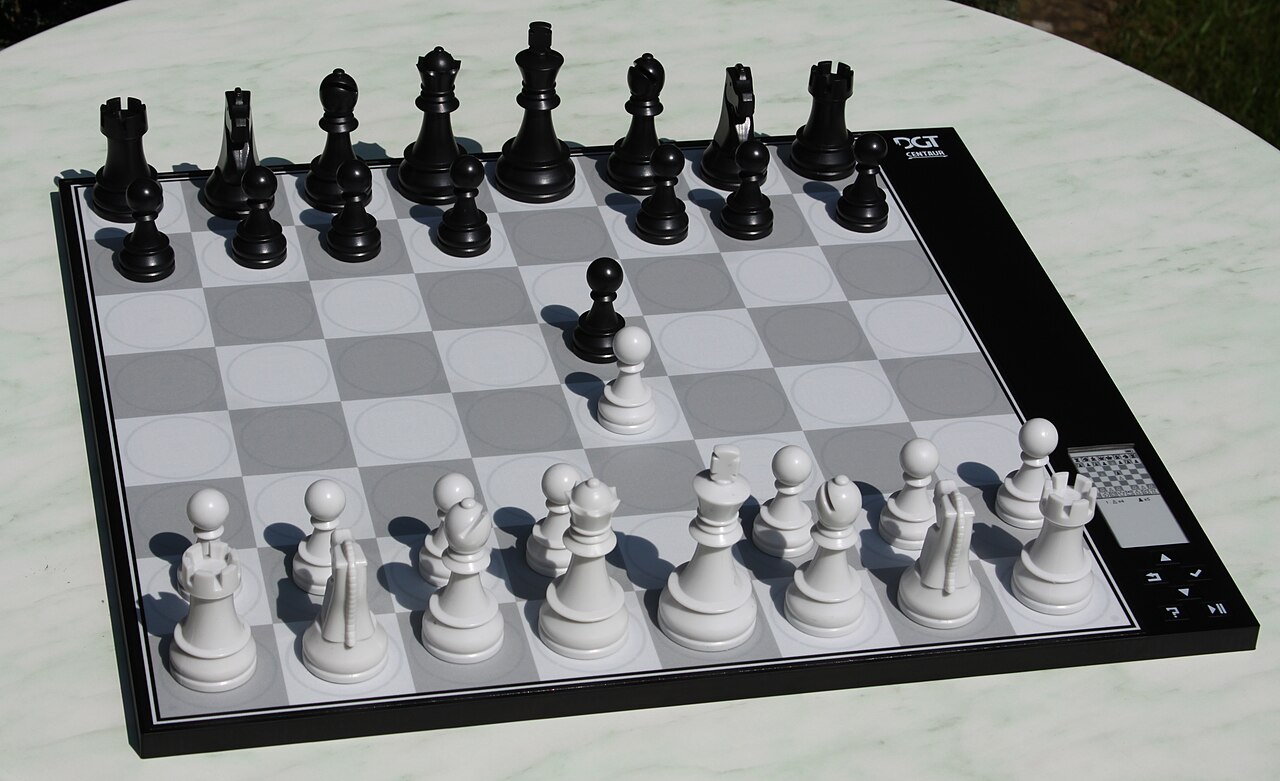
This is the rise of the centaur!
What on earth is he on about now, I hear you cry.
In 2015, looking for some semblance of the future, I looked to chess. I have never been very good at chess. I tried to improve by playing online. I never got past beginner level.
After Garry Kasparov lost to IBM’s Deep Blue in 1997, he did something extraordinary. He didn’t retreat from the game, he redefined it. He pioneered freestyle chess, where humans and machines team up, as centaurs. The result? Not only were centaur teams more effective than AI or humans alone, but the very best centaurs weren’t necessarily grandmasters, they were teams who understood how to collaborate with their machines.
From this, I imagined that a symbiotic, mutualistic relationship between professional and machine was inevitable: the professional centaur. And that, I argue, is the future of professional identity.
The professions have deep-rooted traditions and strong regulatory frameworks. Professional bodies and their leaders are uniquely placed to drive change, not be driven by it. But we must be clear-eyed about what’s changing.
Technical knowledge is no longer a differentiator. AI can access knowledge faster than any professional. It is also replacing the ‘grunt work’, the tiresome tasks of research, discovery and preparation where new and junior professionals cut their teeth.
Client expectations are shifting. Speed, clarity, and 24/7 responsiveness are now minimum standards.
Ethics, trust, and human judgment are premium assets. When AI can tell you what’s possible, it’s the professional’s job to ask what’s right.
This is what it means to be a centaur in a profession today: not resisting the machine, but shaping its role. Asking better questions. Exercising discretion. Being accountable.
What did I get right and what comes next?
I didn’t predict the pace. If anything, I underestimated how quickly generative AI would leap from labs to laptops. But the fundamental shift, from labour to leverage, was correct. And that has profound implications for professional bodies and associations.
Credentialling must evolve. We must certify not just knowledge, but an individual’s capacity to collaborate ethically and effectively with AI, to use the tools available to them. To be a centaur.
If you are, like me, a certain age, you will remember being told at school you could not use a calculator in examinations because you would not carry one with you throughout life. We are currently adopting the same principal about AI when we assess the competence of new professionals. We test them as humans, they work as centaurs.
CPD must be redefined. Yes, again. Prompt engineering, data interpretation, and critical thinking now belong in every professional syllabus. The purest CPD has always been reflective practice and AI can now help us reflect on our practice and how we can make the smartest, most impactful changes in our professional lives.
Professional identity must be protected, and reimagined. Our members are no longer just practitioners. They’re integrators, curators, interpreters, and advocates. They are centaurs.
The real challenge ahead is not technological, but institutional and cultural. Can we equip our professionals to thrive as centaurs? Can we design regulation that supports hybrid practice without sacrificing accountability? Can we lead a conversation about the value of human judgment in an algorithmic age?
I believe we can. But we must act with urgency. And with imagination.
We are not being replaced by machines. We are being invited to evolve.
Date published: 30 September 2025
 Back to previous page
